
意味: ~している/~した状態だ
形式: be + 感情形容詞
語源・イメージ:多くは過去分詞から派生した形容詞。「外からの刺激を受けて、その状態になっている」→ be surprised(驚かされた状態)のイメージ。
ポイント:be動詞+感情形容詞で「~している状態」を表す。前置詞とのセットで覚えると実用的:
英文
(1) She is sad about the news.
(2) I am anxious about the result.
(3) We are nervous about the interview.
(4) She was angry with her boss.
(5) I am pleased to meet you.
(6) We are excited about the trip.
(7) He is worried about the exam.
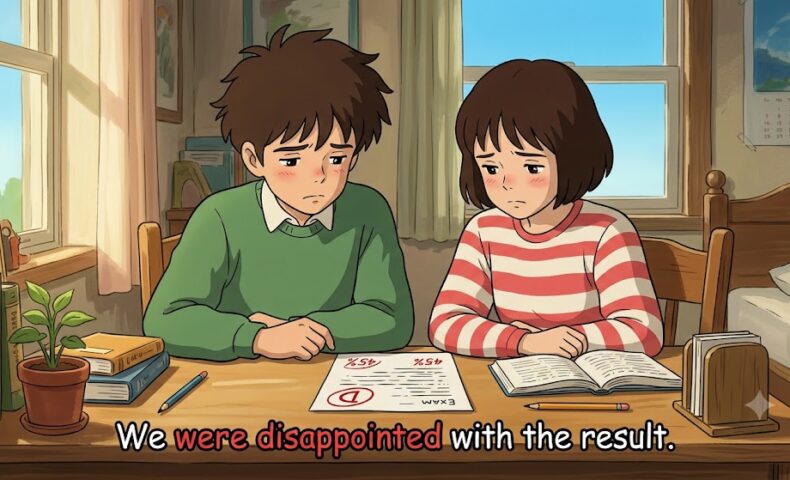
(8) We were disappointed with the result.
言葉・表現のヒント
anxious /ˈæŋkʃəs/ 不安な、心配している
nervous /ˈnɜːrvəs/ 緊張している
pleased /pliːzd/ 喜んでいる
excited /ɪkˈsaɪtɪd/ 興奮している、わくわくしている
worried /ˈwʌrid/ 心配している
disappointed /ˌdɪsəˈpɔɪntɪd/ がっかりした
result /rɪˈzʌlt/ 結果
interview /ˈɪntəvjuː/ 面接
trip /trɪp/ 旅行
日本語
(1) 彼女はその知らせに悲しんでいる。
(2) 私は結果のことが不安だ。
(3) 私たちは面接のことで緊張している。
(4) 彼女は上司に怒っていた。
(5) お会いできて嬉しいです。
(6) 私たちは旅行についてわくわくしている。
(7) 彼は試験のことが心配だ。
(8) 私たちは結果にがっかりした。