意味:〜を手放す、~と別れる
形式:part with + 名詞
ポイント:
物に対しては「惜しみながら手放す」、人に対しては「名残惜しく別れる」が核心。どちらも簡単には手放せない・別れたくないニュアンスが含まれる。
英文:
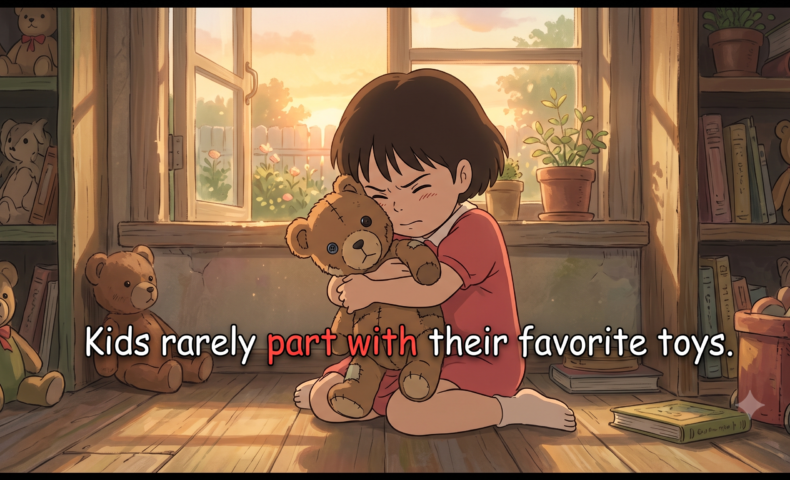
(1) Kids rarely part with their favorite toys.
(2) She parted with her childhood home.
(3) My uncle parted with his vintage car last spring.
(4) He parted with his mentor after ten years.
(5) I parted with my best friend at the airport.
(6) We parted with our host family at the station.
言葉・表現のヒント:
rarely /ˈreərli/ めったに~ない
childhood home /ˈtʃaɪldhʊd hoʊm/ 子ども時代の家
vintage car /ˈvɪntɪdʒ kɑːr/ クラシックカー
mentor /ˈmentər/ 師匠、メンター
host family /hoʊst ˈfæmɪli/ ホストファミリー
station /ˈsteɪʃən/ 駅
日本語:
(1) 子どもたちはお気に入りのおもちゃをめったに手放さない。
(2) 彼女は子ども時代の家を手放した。
(3) 私の叔父は昨春クラシックカーを手放した。
(4) 彼は10年後に師匠と別れた。
(5) 私は空港で親友と別れた。
(6) 私たちは駅でホストファミリーと別れた。